
PharmaSUG Single-Day Event
Clinical Data Standards and Technology: Gateway to Regulatory Submissions!
Saturday, April 12, 2025
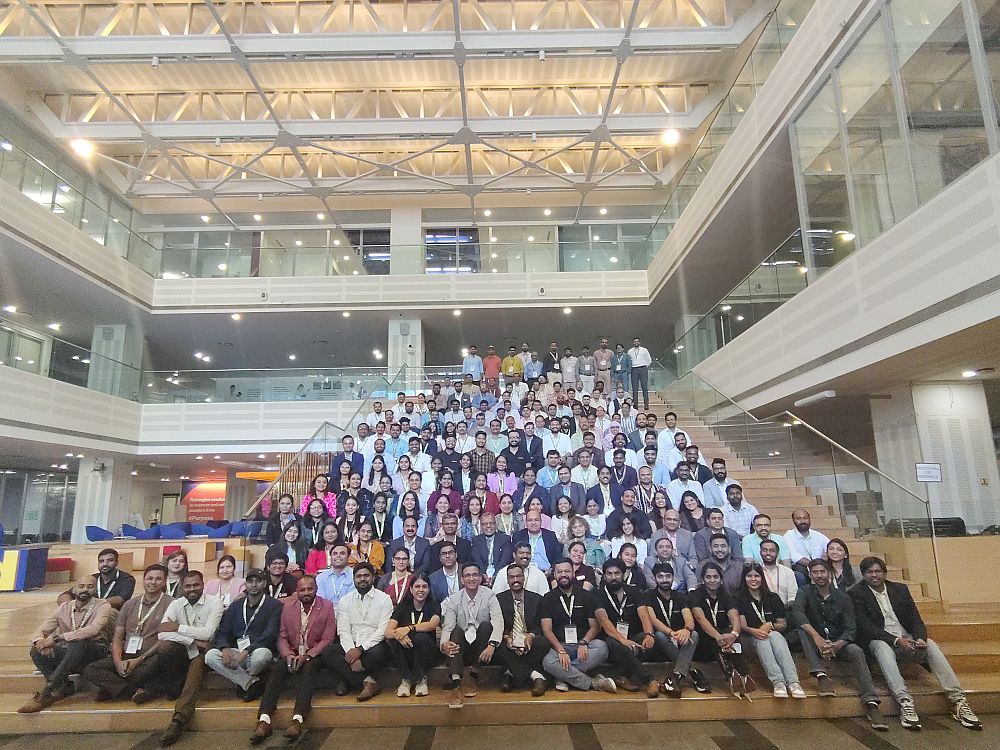
Thank you to all of our attendees, presenters and sponsors for a wonderful conference!
Check out the conference photo album!

Karthik Darbha
Novartis
Single-Day Event Co-Chair

Shashikant Kumar
Ephicacy
Single-Day Event Co-Chair

Pramod Nangunuri
Novartis
Single-Day Event Co-Chair
Conference Committee:
Ajay Gupta (Daiichi Sankyo), Syamala Schoemperlen (Ephicacy Consulting Group), Eric Larson (IQVIA)
Social Media:
Inka Leprince, Alice Cheng, Jyoti Jo Agarwal
Questions? Contact us!
Premier Sponsor

Gold Sponsors


Silver Sponsors

Bronze Sponsors





Event Schedule
Saturday, April 12, 2025 | Single-Day Event Presentations (click link for slides)
Posters (click link to view)
Presentation Descriptions
Keynote: The Evolution of Statistical Programmers in a Dynamic Regulatory Industry
The Evolution of Statistical Programmers in a Dynamic Regulatory Industry
Sunil Gupta, CDISC, SAS and R SME and Mentor, Strategic Advisor to Verisian
Throughout my three decades working in the pharma industry, I have experienced several evolutionary phases that have drastically changed my day-to-day programming role, client responsibilities and skill sets. My journey has been both challenging and rewarding since I followed my dream to make a difference in the quality of lives!
Let’s take a tour together as we explore the early days of statistical programming when sponsors and CROs created their own versions of analysis datasets and table shells to streamline and automation of common utility procedures and more advanced clinical trial management and monitoring! We will also review some of the core fundamental concepts that are still relevant today for generating reproducible and valid clinical study results.
An Implementation of PK-QT Analysis
Anubrata Kundu and Craig Wang, Novartis
QT prolongation is an important identified risk for many anti-cancer drugs. PK-QT (concentration – QT) analysis is a technique that matches pharmacokinetic data with ECG/EKG data from clinical studies. The purpose of this analysis is to characterize the PK-QTcF relationship and assess the impact of combination partners on the relationship between the drug concentration and changes from baseline of QTcF. A linear mixed model with covariates including ECG data (baseline and post-baseline) will be used as statistical method based on the pooled data. Before modeling the PK-QTcF relationship, QT and QTcF at baseline is plotted against RR at baseline to assess the appropriateness of the Fridericia correction, following ICH E14 guidance. Demographics, baseline QTcF by study, and distribution of ΔQTcF in matched ECG records will be presented highlighting the model-based estimates of change from baseline QTcF.
Implementing Best Practices for Clinical Data Standards in Modern Digital Era for Regulatory Submissions
Mrityunjay Kumar, Ephicacy
In the rapidly evolving landscape of clinical research, the adoption of standardized data formats and advanced technologies is pivotal for efficient and successful regulatory submissions. This presentation will explore the critical role of clinical data standards, such as CDISC (Clinical Data Interchange Standards Consortium) models, in streamlining the submission process to regulatory bodies like the FDA and EMA. By ensuring consistency, accuracy, and interoperability of clinical data, these standards facilitate a more transparent and expedited review process.
Additionally, we will delve into the technological advancements that are transforming data management and submission workflows. Innovations such as electronic data capture (EDC) systems, cloud-based platforms, and artificial intelligence (AI) are enhancing data quality and operational efficiency. These technologies not only support compliance with regulatory requirements but also enable real-time data analysis and decision-making.
This presentation discusses best practices for implementing clinical data standards and leveraging technology to optimize regulatory submissions and aims to equip clinical researchers and data managers with the knowledge and tools necessary to navigate the complexities of regulatory submissions in the digital age as well as highlights current challenges.
Automating Clinical Study Report Development Using Generative AI
Niharikka Tyagi and Aman Sandal, Sycamore
The creation of Clinical Study Reports (CSRs) is a cornerstone of clinical research, vital for regulatory submissions and advancing medical knowledge. Traditionally a labor-intensive process requiring the seamless integration of protocol content, statistical data, and regulatory elements, CSR development is now poised for transformation through Generative AI.
This paper explores how advanced natural language processing (NLP) capabilities streamline CSR preparation by automating key workflows. Intelligent content mapping and linguistic refinement ensure structural accuracy, eliminate redundancies, and align reports with global regulatory standards. Complex study data is converted into actionable insights through AI-driven analysis, enhancing the clarity and relevance of findings.
By reducing manual intervention in interpreting and contextualizing study outcomes, this innovation accelerates report generation while maintaining exceptional quality and compliance with internationally recognized frameworks, including ICH E3 guidelines. It shortens timelines, ensures data integrity, and empowers research teams to focus on high-value analytical and strategic efforts.
Generative AI represents a paradigm shift in clinical research, delivering scalable, precise, and efficient solutions for modern regulatory reporting workflows and setting new benchmarks for operational excellence in the industry.
Enhanced Kaplan-Meier Plots with ggplot2: Integration of At-Risk and Statistics Tables in R
Parasbhai Patel, Cytel
This presentation will show you how to create effective Kaplan-Meier plots in R with the ggplot2 package, ensuring compliance with data standards for regulatory submissions. The focus is on standardizing outputs while meeting mock shell requirements and restrictions on certain R packages for graphical representation. Due to regulatory constraints on graphical packages, ggplot2 is favored for its structured and reproducible visualization capabilities. This choice guarantees compliance, reproducibility, and compatibility in a controlled setting. Key features include an at-risk table integrated into the plot and a detailed statistics table that shows N, events, odds ratio, 95% confidence intervals, and p-value, organized by treatment groups. By using ggplot2, users benefit from flexibility, customization, and high-quality graphical outputs, all while ensuring consistency and adherence to industry standards. This presentation offers a step-by-step guide, providing analysts with practical techniques for producing publication-ready Kaplan-Meier plots in R with ggplot2.
Advancing Clinical Trial Submissions: The Impact of GenAI and CDISC Compliance with Trustworthy Analytics
Soundarya Palanisamy and Ashwini Reddy, SAS
Many CROs and pharmaceutical organizations have established technical processes to be followed for the submission of documents in the eCTD format. Tabular listings of clinical studies, CSRs, CRFs, periodic safety reports, IND safety reports, literature references, and datasets. The reporting is complex and requires adherence to protocols and compliance with Good Clinical Practice, and precise documentation formatted according to guidelines set by regulatory authorities. This paper discusses the potential for using LLMs and other Natural Language Processing (NLP) techniques in these processes to aid data interpretation, clinical documentation, regulatory submission, and post-trial analysis, while being watchful of data privacy, model bias, and responsible adoption.
Real-World Evidence (RWE) – Transforming Healthcare Decision-Making
Manasa Chikkela, SCL IT
Real-World Evidence (RWE) refers to clinical insights derived from Real-World Data (RWD) collected outside the controlled environment of randomized clinical trials (RCTs). This data is obtained from electronic health records (EHRs), insurance claims, patient registries, wearable devices, and social media. Regulatory agencies like the FDA, EMA, and PMDA are increasingly recognizing RWE as a crucial tool in drug development, post-market safety surveillance, and healthcare decision-making.
Unveiling Hidden Insights: Leveraging Knowledge Graphs for Precision Medicine and Clinical Data Analysis
Ravi Mandal, GSK
Knowledge graphs (KGs) have emerged as transformative tools in the realm of clinical data analysis, helping to bridge gaps between diverse and fragmented healthcare information. By connecting different sources of data, KGs enable clinicians and researchers to see the bigger picture, allowing for more informed decision-making and personalized treatment options for patients. By linking various data points and revealing hidden insights, KGs not only enhance the understanding of medical conditions but also help improve patient outcomes, offering hope and precision in healthcare delivery.
Creating an SDTM Chatbot (P21) in MS Teams
Sreekanth Kollipara, Syneos Health
This presentation explores how to build a chatbot in MS Teams following P21 guidance, without requiring any programming knowledge. The chatbot serves as a powerful tool for self-learning, standardization, and guidance across industry, teams and departments. Additionally, it has the potential to be expanded to other areas such as ADaM, TLG, and Management.
An Overview of Regulatory Submission by Using R Language
Nishanth Sungaram, Fortrea
For years, the SAS language has been the backbone of regulatory submissions in the pharmaceutical industry. But as the demand grows for faster, more cost-effective ways to bring treatments to patients, the industry is beginning to embrace new tools. One exciting shift is the adoption of R-based submissions, which offer flexibility and efficiency. Regulatory agencies across the world now require electronic submissions of data, programming codes, and documentation, and R is becoming a key player in meeting these needs. In recent years, open-source languages like R have gained tremendous popularity in the pharmaceutical and research communities. However, many sponsors are still hesitant to rely on R for regulatory submissions, often due to a lack of real-world examples demonstrating its potential.
In this presentation, I’ll share insights into the journey of R-based clinical submissions, including some of the pilot projects submitted to the FDA. I’ll walk through the different R packages used throughout the process, from initial programming to final submission, and discuss practical ways to validate and manage risks. Along the way, I’ll highlight the benefits and challenges of using R and explore its future possibilities for pharma and CRO companies. This shift toward R isn’t just a trend—it’s a meaningful change that could redefine how we bring treatments to patients faster and more efficiently.
Revolutionizing Gene Therapy for Hemophilia B
Kaushik Save, Pfizer
Hemophilia B, a rare genetic bleeding disorder caused by a deficiency in coagulation factor IX (FIX), affects over 38,000 people worldwide. This X-linked disorder primarily impacts males, occurring in approximately 1 in 30,000 male births. The severity ranges from increased bleeding after injury to spontaneous hemorrhages and severe hematomas. Current treatments involve prophylactic factor replacement therapy, requiring frequent intravenous infusions of FIX concentrates to maintain detectable levels of FVIII and FIX activity, thus preventing bleedings. However, complications can arise, including inhibitory antibodies against coagulation factors, reducing treatment efficacy.
Fidanacogene Elaparvovec: an adeno-associated virus (AAV)-based gene therapy designed to introduce a functional FIX gene variant into hepatocytes. This one-time treatment allows individuals with Hemophilia B to produce FIX internally. Clinical trials have shown promising results over three years of follow-up. Approved by the U.S. FDA and EMEA, this innovative therapy offers sustained bleed protection and potentially eliminates the burden of frequent prophylactic treatments. Ongoing clinical trials continue to monitor long-term safety and efficacy, paving the way for a new era in Hemophilia B treatment. Regulatory considerations across the US, EU, and Japan highlight the global impact and significance of this breakthrough gene therapy, offering hope and improved quality of life for those living with Hemophilia B.
In this presentation, I will outline Pfizer’s innovative gene therapy approach. We’ll explore the benefits it offers compared to conventional treatments, examine its current market standing, and delve into the regulatory approval process for gene therapy products across the FDA, EMA, and PMDA.
Poster Descriptions
Optimizing R Add-On Package Management: Seamless Management from Download to Deployment
Vikrant Bisht, Sanofi
R, an open-source programming language, offers a vast array of dedicated packages tailored to specific functionalities. The pharmaceutical domain relies heavily on dedicated functions contained in these packages for Regulatory Submission. This poster aims to unravel the power of R to streamline package management right from download, install and test load R packages, ensuring a qualified environment with robust functionality and compatibility, facilitating thorough package tracking and management enhancing accessibility and reliability for pharmaceutical research and development.
From Query to Compliance: Leveraging Standards, Technology, and Agile for Efficient Health Authority Responses
Vikas Shokeen, Cytel
Post-submission queries can hinder regulatory compliance and delay crucial approvals. This presentation demonstrates how an integrated approach leveraging clinical data standards (SDTM, ADaM), combined with powerful technologies like SAS® Macros and R Shiny, and streamlined through Agile methodologies, provides a clear path from query to compliance. We showcase practical applications: macros for rapid, targeted analyses (subgroup, sensitivity, data reformatting); Shiny dashboards for interactive reviewer data exploration; and Agile workflows for efficient query management and communication. Macros enable quick generation of analyses, while Shiny empowers reviewers to independently address follow-up questions, minimizing further requests. Agile streamlines query tracking and enhances communication with health authorities. This integrated approach significantly reduces response times, improves accuracy and auditability, and transforms reactive query management into a proactive, efficient, and compliant process, ensuring queries facilitate, rather than obstruct, the path to regulatory success.
Cloud Computing: The Next Frontier in Regulatory Submissions
Kavita Dargan and Jitendra Singh, IQVIA
The integration of cloud computing in pharmaceutical and life sciences regulatory submissions is transforming drug development by enhancing scalability, flexibility, and cost-efficiency. Cloud platforms streamline data management, facilitate secure and scalable storage for clinical trial datasets, and enable data sharing, integration, and analysis, supporting informed decision-making. These platforms improve global collaboration among researchers, regulators, and healthcare providers by ensuring seamless communication and data exchange. A significant benefit is accelerated time-to-market for therapies, achieved by optimizing workflows and automating repetitive processes. Cost-effectiveness is another advantage, as cloud computing reduces infrastructure expenditures and maximizes resource utilization, making it accessible to organizations of all sizes. Additionally, it ensures compliance with evolving regulations, maintaining data integrity, traceability, and transparency. By adopting cloud technologies, pharmaceutical industries can drive innovation, enhance patient outcomes, and foster a patient-centric approach to drug development, positioning themselves as leaders in a competitive landscape.
Advancing Pharmacogenomics: Implementing SDTMIG-PGx v1.0 in SDTMIG v3.4
Priyadharshini Murugan, Pfizer
The field of pharmacogenomics (PGx) is crucial for understanding how genetic variations affect individual drug responses. As integrating genomic data into clinical practice becomes increasingly important, the need for a specialized Implementation Guide (IG) for PGx data has emerged. The implementation of SDTMIG-PGx v1.0 in SDTMIG v3.4 marks a significant advancement in standardizing pharmacogenomics and pharmacogenetics data.
This paper aims to provide a comprehensive overview of the new guidelines from CDISC for mapping PGx data, including the transition from the Pharmacogenomics Findings (PF) domain to the Genomics Findings (GF) domain and the deprecation of provisional domains such as PG, PB, and SB. Additionally, it will discuss the incorporation of biospecimen domains like BE, BS, and RELSPEC in v3.4, which will be revised in future versions. The transition will present challenges such as data integration, training, implementation, and regulatory compliance. By addressing these challenges, organizations can better manage the transition, ensuring data integrity, consistency, and compliance with regulatory requirements.
The paper will also explore the specifics of SDTM standards, including variable attributes like names, labels, types, and formats, as well as the use of controlled terminology and codelists, focusing on genetic variation and gene expression. Ultimately, this paper will offer valuable insights and practical guidance for successfully adopting the new standards, improving the quality and consistency of pharmacogenomic data, and enhancing overall data management and submission practices.
Debugging the Relationship of NCI - CTCAE in Laboratory and Adverse Events Data
Chaithanya Velupam and Arun Kumar Bharathidasan, Fortrea
The Common Terminology Criteria for Adverse Events (CTCAE) is a pivotal standardized grading system utilized in clinical trials to evaluate the severity of adverse events (AEs) associated with medical treatments. This system categorizes AEs into five grades, from 1 (mild) to 5 (fatal), based on their impact on patient health and daily functioning. The CTCAE enables consistent communication among healthcare professionals regarding treatment-related toxicities, thereby enhancing patient safety and guiding treatment decisions. The latest version, CTCAE V5.0, introduces a complex approach by considering baseline data for toxicity grading, thereby improving accuracy and consistency in adverse event classification. This paper discusses the integration of CTCAE grading within clinical trial data, particularly focusing on the relationship between laboratory test results and adverse events and provides illustrative examples of uni-directional and bi-directional toxicity assessments. Through this exploration, the paper underscores the significance of the CTCAE in clinical research, highlighting the abnormal laboratory data carried to adverse event data.
Trial Design Domain Automation
Subha Sri Julakanti, Pfizer
The Trial Design Domain (TDM) serves as an essential framework in clinical research, meticulously outlining the various elements of a clinical trial’s design, including objectives, methodologies, participant criteria, interventions, and outcomes. This framework is crucial for ensuring that clinical trials are conducted with adherence to regulatory standards, scientific rigor, and ethical guidelines. However, the traditional processes associated with TDM creation pose several challenges. The integration of automation into TDM creation addresses the challenges effectively by utilizing advanced technologies such as natural language processing, electronic data capture systems, and robotic process automation. Automation enhances data standardization and quality by applying predefined templates and regulatory standards automatically, reduces manual errors and time consumption, and streamlines regulatory compliance through built-in checks and version control mechanisms. Furthermore, automated platforms are capable of dynamically adjusting to complex trial designs and facilitating enhanced collaboration and communication among stakeholders via real-time data sharing and integrated tools. The impact of automation on TDM creation is profound, resulting in significantly increased efficiency, enhanced accuracy, reduced costs, improved data quality, and enhanced stakeholder collaboration and flexibility.
Automation minimizes the need for manual intervention, reduces human error, and accelerates trial setup and execution, ultimately enhancing the overall quality and reliability of clinical research. As the field of clinical research continues to evolve, the adoption of automation in TDM creation will play a pivotal role in driving Innovation and efficiency, fostering more patient-centric and effective clinical trials. This presentation will explore the evolution of TDM from foundational frameworks to advanced automated systems, emphasizing the transformative benefits of automation in shaping the future of clinical research.
Improved Longitudinal Data Analysis: A Piecewise Linear Mixed Effect Modelling Approach
Supriya, Cytel
Mixed effects models for repeated measures are extensively used in clinical trials. It provides a comprehensive way to analyze longitudinal continuous endpoints of clinical trials. In many applications, we observe irregular rates of changes (rapid fluctuations in the rate of change) during the study period. Nonlinear trends of this type may not be well approximated by polynomials of any order. Piecewise linear mixed effects models offer an attractive alternative to commonly used spline regression because the coefficients obtained from fitting the model have meaningful substantive interpretation. One way to represent polynomial curves of this type is to have a sequence of connected line segments that produces a piecewise linear pattern. Piecewise linear mixed effects model consists of piecewise linear trends with different slopes in different segments but joined together at fixed times (knots). The concept of piecewise linear mixed effects model will be discussed in detail. The results will be interpreted using an example.
Navigating the Accelerating Clinical Trials Landscape in AI Age – A Junior Statistical Programming Perspective
Bigyani Samal, Maharshi Mandal, and Maninee Shrivastava, SDC Clinical
As a Junior Statistical Programmer, learning SAS, SDTM, and ADaM is foundational, along with gaining expertise in data manipulation, identifying data issues, missing data imputations, creating flags, and summarizing data. Collaboration with Clinical Programming involves generating SAS listings, edit checks, and ensuring data consistency in EDC systems and integrated external data sources. Beyond standard dataset and TLF programming, responsibilities extend to define.xml development, resolving P21 issues, and contributing to submission packages including cSDRG and ADRG documents. While SAS remains the primary tool, R is increasingly used for real-time analytics, visualization, and automation. R packages like dplyr, haven, and admiral streamline workflow efficiency and support CDISC-compliant ADaM dataset creation. The transition from static reporting to interactive dashboards using R, R Shiny and other visualization tools such as Power BI, Tableau etc. has revolutionized data review, enabling real-time exploration of patient data, proactive interventions, and improved clinical oversight.
Automation of project tracking and validation minimizes inefficiencies, reduces manual effort, and enhances data quality, while AI-driven tools improve study monitoring and anomaly detection. AI also plays a vital role in adverse drug event (ADE) detection, risk prediction, and dosing recommendations. Since clinical data is often unstructured, AI-driven standardization ensures compatibility and accelerates decision-making. Real-time analysis of vast datasets helps identify trends and correlations, enabling timely protocol adjustments. Cross-collaboration is essential, involving coordination with data management, clinical programming, and biostatistics teams. Engaging with multiple teams fosters knowledge-sharing and problem-solving, ensuring seamless integration of innovative technologies in clinical trials, ultimately enhancing efficiency, accuracy, and patient safety.
Implementing the CDISC Library RESTful API in R: Automated Access to Metadata Repositories and Controlled Terminologies
Jagadish Katam, Princepstech
The CDISC Library API offers programmatic access to clinical data standards (e.g., SDTM, ADaM domains, variables, and controlled terminologies), enabling automation of compliance workflows in clinical research. This presentation explores an R-based implementation of the API to retrieve and structure CDISC metadata and controlled terminologies, eliminating manual extraction from PDF or Excel resources. Using the httr2, jsonlite, and tidyverse packages, we demonstrate a reproducible pipeline to query the /mdr/ct/packages endpoint, parse JSON responses into structured data frames, and merge codelists with their terms. Key challenges such as authentication (via API keys) and nested JSON parsing are discussed. This approach leverages R’s capability to interact with RESTful APIs while adhering to CDISC’s evolving standards, reducing manual effort and improving traceability in clinical data workflows.
Optimization of Multiple Enrolment/Screening Records in Demographics as Collected (DC)
Shilphan Dabhi and Dinesh Paila, Ephicacy
The domain Demographics as Collected (DC) is suggested by Multiple Subject Instances (MSI) team to capture similar demographic data recorded in Demographics (DM) domain, currently the DC domain is in process of standardization. In studies with multiple screenings or enrollments, the variable SUBJID tracks re-screened subjects, which means the same individual can have different SUBJID values for each screening. As a result, there isn’t always a one-to-one relationship between USUBJID and SUBJID in these cases. As per Food and Drug Administration (FDA) TCG (Technical conformance guide) v4.5.1(July 2020) section 4.1.1.3 SDTM Domain Specification: if a subject undergoes multiple screenings followed by re-enrollments, include their primary enrollment data in the DM domain, and capture the additional screening records in a custom domain.
This paper delves into the possible scenarios in creation of custom domain DC (Demographics as collected) with a similar structure as DM. We aim to illustrate the underlying concepts and demonstrate programming techniques to efficiently represent DC data across various scenarios, including:
Multi-Screened in a Study: Addressing cases where individuals undergo multiple screenings within the same study and ensuring accurate data representation.
Multi-Enrolled in a Study: Managing scenarios where individuals are enrolled multiple times in the same study, capturing comprehensive and consistent demographic details for each enrollment instance.
Presenters